


Zhuangzi's 'Sitting in Forgetfulness': A Complete Guide to the Taoist Practice and Its Profound Realm
Explore the ancient Taoist practice of 'Sitting in Forgetfulness' (Zuowang) as taught by Zhuangzi. Learn its philosophy, step-by-step method, benefits, and precautions for modern practitioners.
Zhuangzi’s “Sitting in Forgetfulness” (坐忘, Zuòwàng) is a profoundly deep cultivation state in Taoist philosophy—both a method of spiritual transcendence and the ultimate goal of merging with the Tao.
What Is “Sitting in Forgetfulness”?
“Sitting in Forgetfulness” originates from the chapter “The Great Ancestral Teacher” (大宗师) in the Zhuangzi, presented through a dialogue between Yan Hui and Confucius. The text states: “Yan Hui said, ‘I let my limbs and body fall away, I dismiss my intelligence, I depart from form and abandon knowledge, and become one with the Great Thoroughfare. This is what I call sitting in forgetfulness.’”
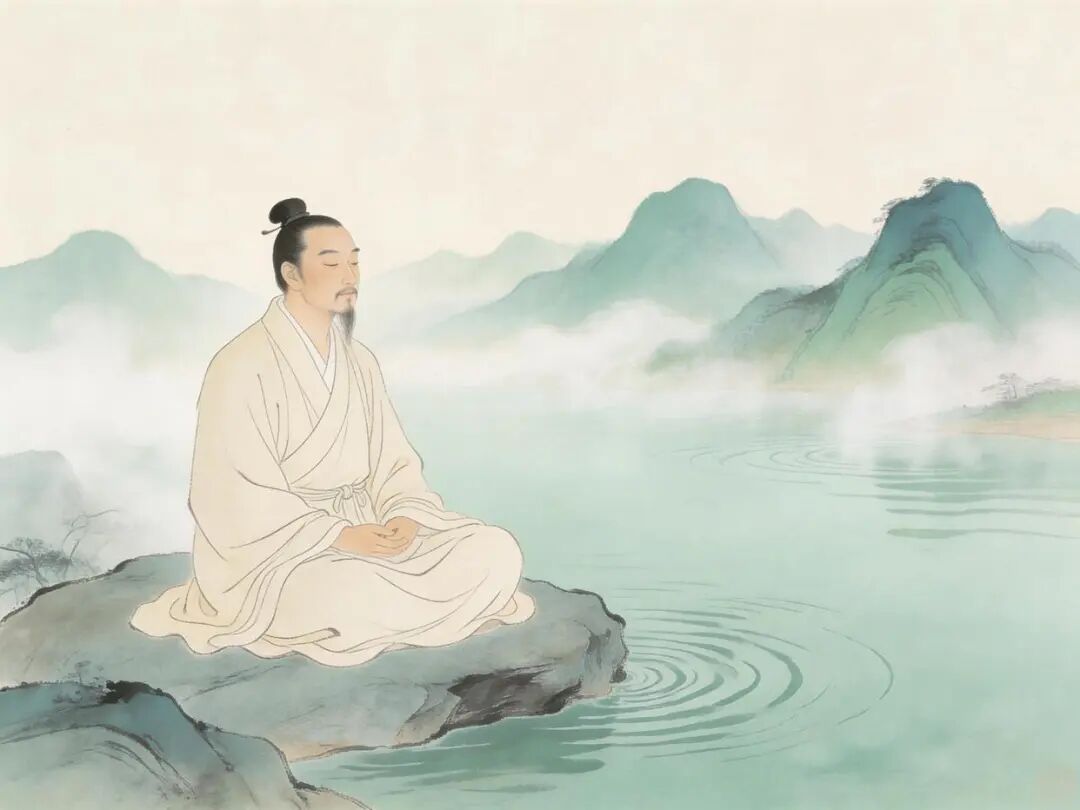
First, “forgetting the body” (忘形) involves “letting limbs fall away” and “departing from form,” transcending the constraints that physiological desires impose on the spirit, and freeing oneself from the limitations of physical existence. Second, “forgetting the intellect” (忘智) involves “dismissing intelligence” and “abandoning knowledge,” setting aside the interference of worldly knowledge, right-wrong judgments, and rational thinking, returning to an intuitive and natural way of perceiving. Finally, “forgetting the self” (忘我) dissolves the opposition between subject and object, achieving “unity with the Great Thoroughfare”—the complete fusion of the individual with the cosmic essence (the Tao), reaching the chaotic yet perfect state where “heaven and earth are born with me, and all things are one with me.”
Taoist cultivation places great emphasis on sitting in forgetfulness. In the Tang Dynasty, Sima Chengzhen wrote the Discourse on Sitting in Forgetfulness (坐忘论), emphasizing that cultivating the great Tao requires a mind of non-intention. Non-intention means discarding the “mind of the six dusts and conditional shadows,” allowing the wondrous true mind to manifest naturally—that is, “the mind dies, the spirit lives.” Only then can one “unite with the Great Thoroughfare.”
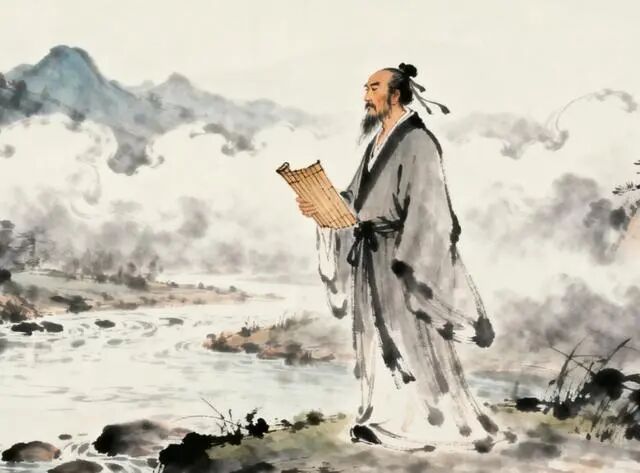
Song Dynasty master Bai Yuchan, in his Mysterious Gate and Hidden Secrets (玄关显秘论), said: “Forget the body to nourish the qi, forget the qi to nourish the spirit, forget the spirit to nourish the void. This single word ‘forget’ means there is no thing. ‘Originally there is not a single thing; where can dust settle?’ Is this not the meaning? If one can savor this principle and work on the word ‘forget,’ one can enter the profound subtlety of the great Tao and seize the natural wonder; establish the elixir foundation in an instant and move the transformation of creation within one’s own body.”
In terms of origins, although Zhuangzi’s method of sitting in forgetfulness is not fully revealed in his writings, the Discourse on the Equality of Things (齐物论) already presents its essence. Nan Guo Ziqi, “leaning on the table, sitting in stillness, looking up to the sky and breathing out softly, appearing as if he had lost his counterpart,” in dialogue with Yancheng Ziyou, vividly depicts the state of sitting in forgetfulness. His form was like dried wood, his mind like dead ashes—body and mind utterly still, the meaning of dual forgetfulness fully displayed. Sima Chengzhen further elaborated that sitting in forgetfulness is the foundation of longevity: first settle the mind, then inner wisdom shines forth, and in the void one merges with the vast silence, making the practice’s significance even more profound.
The Specific Practice Method
1. Posture for Practice
The desk-leaning posture is the unique posture of Zhuangzi’s sitting-in-forgetfulness practice. The practitioner should first loosen clothing and belt, sit naturally on a chair with both feet flat on the ground. Arms may be crossed, tucked into sleeves, or palms overlapped, then bent to rest on the desk. The forehead rests on the arms, the chin slightly tucked in, and the neck slightly extended. At the same time, the hips shift slightly back to ensure the chest and abdomen are relaxed and not compressed. This posture allows the practitioner to enter a state of extreme relaxation after slipping into forgetfulness. If other sitting postures are used, it is difficult to maintain the position, and one might even suddenly topple over. Hence, “leaning on the desk to sit” is crucial.
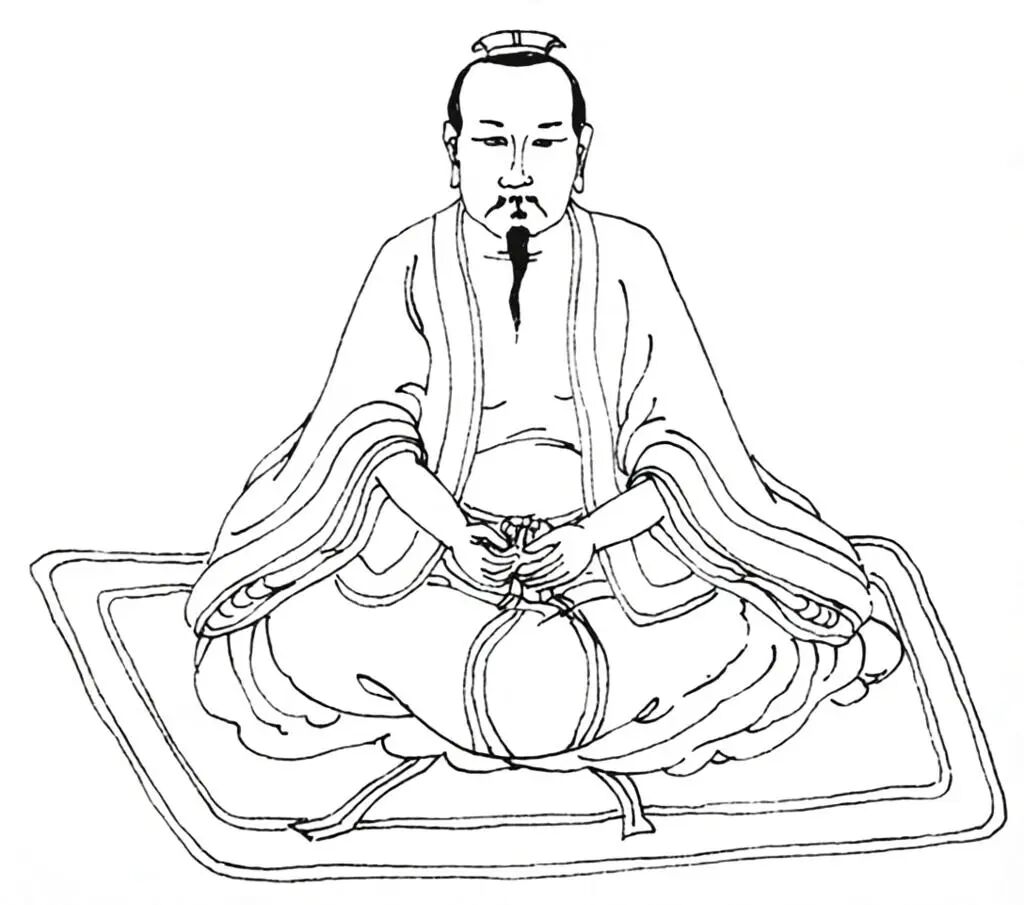
After settling into the posture, take a long exhale to let the qi sink into the dantian. Here, the dantian is located behind the navel and in front of the kidneys, slightly below the point seven-tenths from the front and three-tenths from the back. Then relax the abdomen and breathe naturally. There is no need to regulate the breath or concentrate the mind; simply relax the body and mind, as if after extreme fatigue one wishes to rest, with a feeling of relief. The key points are “relax, sink, forget” (松、沉、忘), with the emphasis on “forget.” If one cannot quickly enter stillness, one may silently repeat “relax, sink, forget” on each exhale as a suggestion to gradually enter the state of forgetfulness.
Beginners may fall into drowsiness or even fall asleep; this should be allowed to happen naturally. With persistent practice, yang qi gradually fills, and sleepiness will no longer occur. Even if one wakes up and continues practicing, sleep will not return. For those with yang deficiency, dual deficiency of yin and yang, or excess of yin or yang—especially those with chronic illness or elderly yang deficiency—practicing in winter and spring, facing away from the sun in a quiet, sunlit room each morning, can help replenish deficiency, generate yang, strengthen the brain, and benefit intelligence. This is called “warming the back” (负暄) or “exposing the back” (曝背). This posture is considered a “scholar’s health method,” especially suitable for intellectuals.
2. Closing the Practice
To close the practice, look up to the sky and exhale once or twice, raise the arms to stretch the waist, or rub the hands together and massage the face. Open the eyes and do a little activity.
Benefits and Effects of Sitting in Forgetfulness
First, it balances the qi channels quickly. The action of tucking the chin and extending the back of the neck, known as “closing the Ren and opening the Du” (闭任开督), facilitates the circulation of the Ren and Du channels. Extending the back of the neck stretches the Du channel, while tucking the chin lowers the qi of the Ren channel, which normally ascends. This is similar to the “chin pressing the throat” technique in Tibetan Buddhism and yoga, aiding in entering stillness.
Second, an important effect of sitting in forgetfulness is “generating yang” (生阳)—restoring and enhancing physiological sexual function. This effect has been regarded by researchers of anti-aging and “rejuvenation” throughout history as a key indicator, and it has good therapeutic effects on sexual dysfunction such as impotence.
Third, sitting in forgetfulness has a remarkable rejuvenating effect. Elderly practitioners of internal alchemy can use this as a method of “planting the medicine,” and those who cultivate Zhuangzi’s pure and simple path can thereby reach the state of “fasting the mind” and “the empty chamber giving birth to light.”
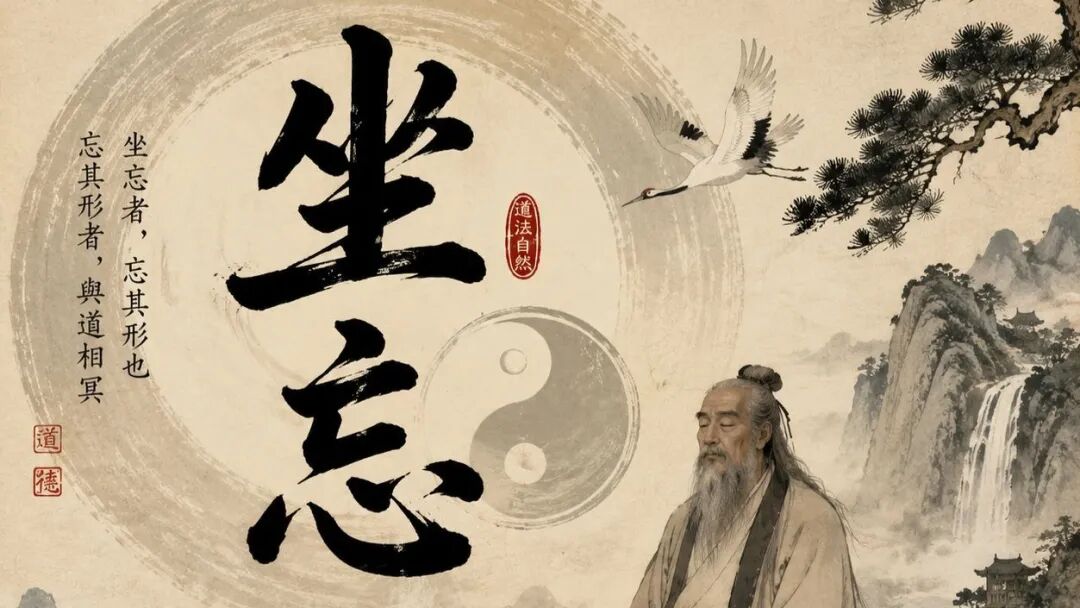
Moreover, clinical practice has proven that practicing this method can tonify the kidneys, generate yang, enhance immunity, clear the mind, boost energy, significantly improve memory, and quickly eliminate mental and physical fatigue. It also stimulates the appetite, strengthens the spleen and stomach, promotes gastrointestinal motility, aids digestion, and relieves constipation. Many elderly practitioners have experienced reversal of physiological aging, such as gray hair turning black, eyebrows regrowing, and enhanced or restored sexual function. Some have also seen heightened intuitive thinking and wisdom, fully proving that this method is highly effective in mobilizing the body’s latent potential.
Precautions for Sitting in Forgetfulness
1. Practice Time and Dietary Taboos
This practice is best done before meals; avoid practicing immediately after a full meal. If you have eaten, wait two to three hours before practicing. Before practice, loosen clothing and belt, and drink a glass of plain water to alleviate possible dry mouth afterward. Elderly practitioners should place a soft cloth between the forearm and the desk to prevent pressure-related issues, as blood circulation may be poor and prolonged pressure could lead to thrombosis.
For elderly or chronically ill patients, especially those with cancer, kidney disease, diabetes, or severe cardiovascular and cerebrovascular diseases, sexual abstinence is required during the treatment period to ensure efficacy. Middle-aged practitioners should also moderate sexual activity to see the benefits.
2. Correct Posture and Handling Adverse Reactions
Ensure the sitting posture is correct. If the chest and abdomen are not relaxed, you may experience mild bloating or slight pain in the lower abdomen after practice, but this is not a concern; it will resolve after passing gas.
Regarding relaxation, deeply understand the meaning of “let go” (放)—to release and open. When relaxing, use intention lightly, without force. The spirit should be relaxed and lively, avoiding attachment. Relax the body first, then the mind. To relax the body, observe from the scalp to the toes, checking and gradually relaxing each part. Then, from the toes upward, observe and let go, transitioning to relaxing the mind—releasing mental thoughts and eliminating the tension of mental activity.
3. Dealing with Drowsiness and the State of Forgetfulness
Drowsiness and distraction are common issues for beginners in stillness practice. Distraction refers to wandering thoughts and stray ideas. Zhuangzi’s method adopts an open attitude toward these, not forcibly controlling them. After relaxing the body and mind, even if thoughts arise, simply ignore them. As for drowsiness, it is inevitable and even necessary in the early stages, because the method of generating yang lies in entering forgetfulness, which requires “dimming conscious awareness.”
In summary, relaxation and forgetfulness must be deepened gradually through continuous practice; one cannot expect to fully achieve them at the start. Progress varies according to age and constitution.
As practice deepens, reactions such as “inner tremor” (内震) may occur—a whole-body tremor after entering forgetfulness, which is a normal sign of complete physical and mental relaxation. Generally, after yang arises, practitioners automatically exit the forgetful state and regain awareness. If yang energy stirs and one exits forgetfulness, one may continue with the forgetting formula; there is no need to force with intense breathing.
More and more people are unhappy? Discussing depression from a Taoist perspective
The Legend of Huolei Hall (Part One)
Sleep paralysis, frequent nightmares! Is it evil intrusion or sleep paralysis? Plus eleven ways to wake up
If you wish to discuss Taoism, destiny, feng shui, or health,
or matters of pure cultivation,
please make an appointment in advance, awaiting those with affinity.
Huolei Taoist Academy · A True Lineage Transmission