


From Daoist Master Zhang Gaocheng's Viral Moment at the Two Sessions to the History of the Quanzhen Longmen School
Daoist Master Zhang Gaocheng, a Quanzhen Longmen School 27th-generation inheritor, gained widespread attention at the Two Sessions. This article explores his viral moment and delves into the rich history and lineage of the influential Quanzhen Longmen School, founded by the revered Qiu Chuji.
During the 2026 Two Sessions, a committee member in a Taoist robe was surrounded by reporters outside the Great Hall of the People. Facing a barrage of cameras, 74-year-old Zhang Gaocheng, a member of the National Committee of the Chinese People’s Political Consultative Conference (CPPCC) and Chairman of the Advisory Committee of the China Taoist Association, remained calm and composed. Holding a smart tablet, his words seemed to press a pause button for everyone present: “Everyone, don’t worry too much!” This statement perfectly served as an antidote for our anxious times.
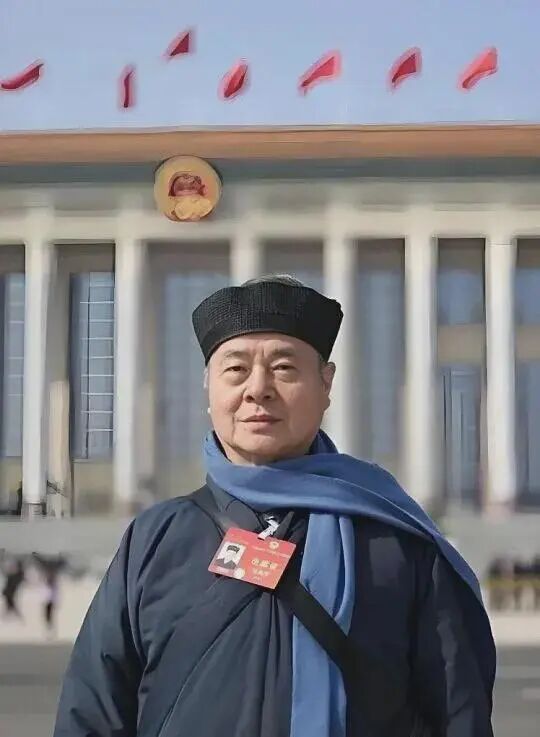
Zhang Gaocheng, originally named Zhang Xueling, with the Taoist name Gaocheng, was born in Beijing in 1952, with ancestral roots in Sichuan. He currently serves as the Chairman of the Advisory Committee of the China Taoist Association, Abbot of Tongbai Palace on Mount Tiantai, and is a member of the 14th National Committee of the CPPCC and its Ethnic and Religious Affairs Committee. He is also a 27th-generation inheritor of the Quanzhen Longmen School of Taoism, belonging to the ‘Gao’ generation.
A straightforward way to identify disciples of the Quanzhen Longmen School is through its hundred-character ‘generation poem.’ The first thirty characters are: ‘De Dao Tong Xuan Jing, Zhen Chang Shou Tai Qing, Yi Yang Lai Fu Ben, He Jiao Yong Yuan Ming, Zhi Li Zong Cheng Xin, Chong Gao Si Fa Xing.’ Longmen School disciples pass down their lineage according to this generational sequence.
This lineage is particularly evident within the leadership of the contemporary China Taoist Association. Among the twenty members of the new leadership, fifteen belong to the Quanzhen tradition. It is clear from this list of members that Longmen School inheritors constitute a significant proportion. For example:
- President Li Guangfu, Taoist name Chengdao, ‘Cheng’ generation, is a 24th-generation disciple of the Longmen School.
- Huang Xinyang, ‘Xin’ generation, is a 25th-generation disciple of the Longmen School.
- Huang Zhian, a female Taoist (Kundao), ‘Zhi’ generation, is a 21st-generation disciple of the Longmen School.
- Tang Chengqing, Lai Baorong, Hu Chenglin, and Zhang Chengda are all of the ‘Cheng’ generation, belonging to the 24th generation of the Longmen School.
- Meng Chongran, Dong Chongwen, and Dong Zhongji are all of the ‘Chong’ generation, belonging to the 26th generation of the Longmen School.
- Huang Zhijie and Meng Zhiling are both of the ‘Zhi’ generation, belonging to the 21st generation of the Longmen School.
- Wu Chengzhen, a female Taoist (Kundao), ‘Cheng’ generation, is a 24th-generation disciple of the Longmen School. In 2009, she was promoted to Abbot of Changchun Temple in Wuhan, becoming China’s first female Taoist abbot.
- Zhang Gaocheng, ‘Gao’ generation, is a 27th-generation disciple of the Longmen School.
The Founding of the Longmen School: The True Lineage of Quanzhen, Benefiting All Under Heaven
The Quanzhen School, also known as Quanzhen Dao, is a major branch of Taoism. Its founder was Wang Zhe, whose Taoist name was Chongyangzi, famously known as Patriarch Wang Chongyang. In the seventh year of Dading during the reign of Emperor Shizong of Jin (1167), Patriarch Wang Chongyang traveled to Shandong to preach. With the aim of ‘preserving one’s true nature and returning to authenticity,’ he named his preaching place ‘Quanzhen Nunnery,’ and those who entered the path were called ‘Quanzhen Taoists.’
Wang Chongyang had seven major disciples—Ma Yu, Tan Chuduan, Liu Chuxuan, Qiu Chuji, Wang Chuyi, Hao Datong, and Sun Bu’er. They subsequently founded the Yuxian, Nanwu, Suishan, Longmen, Yushan, Huashan, and Qingjing branches, respectively. These are collectively known as the ‘Seven True Immortals of the North,’ among which the Longmen School, founded by Qiu Chuji, became the most influential.
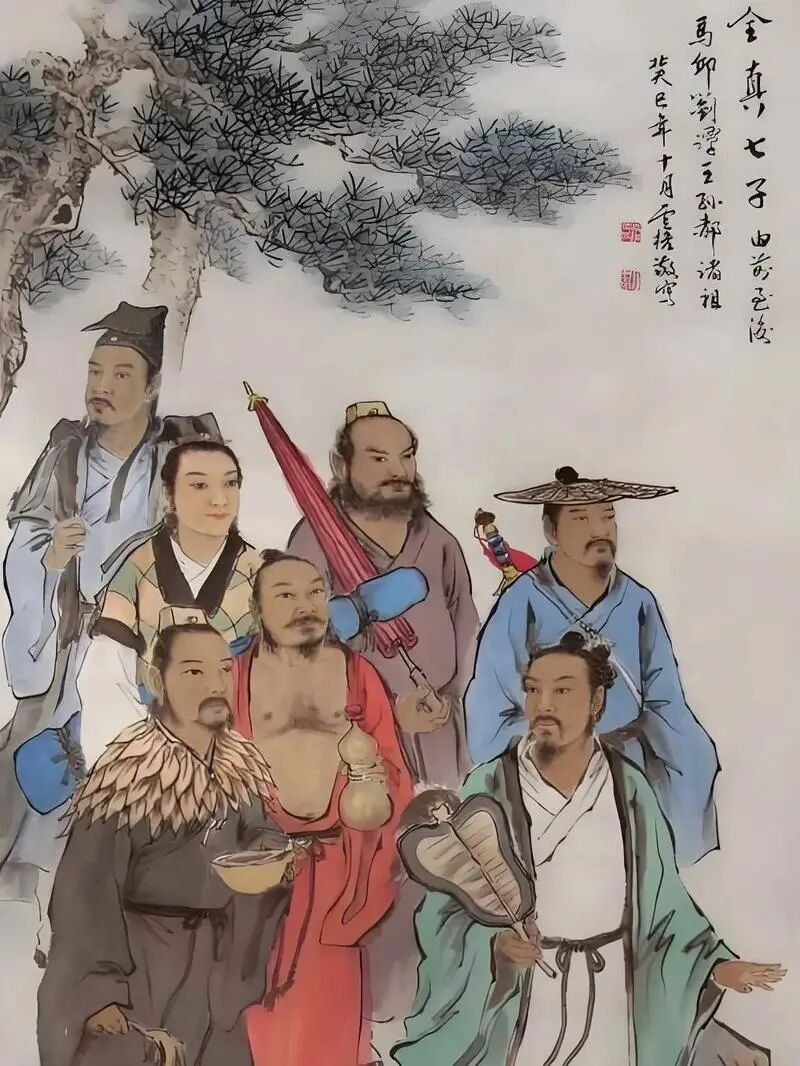
The Longmen School is the mainstream branch of the Quanzhen Daoist sect, inheriting its teachings. Its purpose is to ‘preserve the truth of Laozi and Zhuangzi, and to benefit others through self-discipline.’ The founder of the Quanzhen Longmen School was the eminent Taoist Qiu Chuji (also spelled as Qiu), who lived during the turbulent period of confrontation between the Southern Song, Jin Dynasty, and Mongol Empire. His Taoist name was Changchunzi, and he hailed from Qixia, Shandong. He is a historically renowned Taoist, philosopher, writer, and pharmacologist.
As the patriarch of the Quanzhen Longmen School, Qiu Chuji resolved to cultivate Tao and save the world from a young age. He lived for many years in seclusion in the mountains of his hometown, Qixia, leading a life of ‘wearing pine flowers, eating pine nuts, and drinking pine wind by the moonlit stream.’ At nineteen, Qiu Chuji formally began his study of Taoism at Kunyu Mountain in Ninghai (now Muping, Yantai), becoming a disciple of Patriarch Wang Chongyang, the founder of Quanzhen Dao, and receiving the Taoist name Changchunzi.
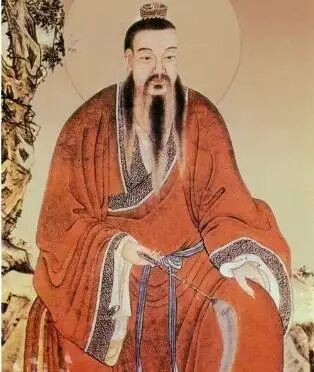
Throughout his long journey of studying Taoism, Qiu Chuji traveled extensively with Wang Chongyang, promoting the Quanzhen School. Afterward, Qiu Chuji secluded himself for several years on Longmen Mountain in Longzhou (now Baoji, Shaanxi), living a life ‘without smoke or fire, nor even a gourd for water,’ spending his days in ‘quiet contemplation, forgetting thoughts, and diligently studying ancient alchemical scriptures.’ It was during this period of secluded cultivation on Longmen Mountain that he founded the Longmen School. He later became the fifth patriarch of Quanzhen Dao, leading the development of Quanzhen Dao, and indeed all of Taoism, into a prosperous era.
Qiu Chuji: A Word to Halt Slaughter, an Immortal Legacy
In the third year of Xingding (1219 CE), Genghis Khan personally led a 200,000-strong army on a western expedition against the Khwarazmian Empire. He sent envoys, including Liu Zhonglu, with an imperial decree to Shandong, inviting Qiu Chuji to meet him in the Mongol Empire. At that time, the world was embroiled in chaotic wars involving the Song, Jin, Mongol, and Liao dynasties. For the sake of all sentient beings, the 73-year-old Qiu Chuji lamented, ‘My emperor’s court is by the river; I wish to cease the wars and bring about great peace.’ He then embarked on a westward journey with eighteen disciples, including Zhao Daojian and Yin Zhiping. After enduring numerous hardships, he finally met Genghis Khan at the ‘Great Snow Mountain’ near Iron Gate Pass (now the Hindu Kush Mountains). Due to Qiu Chuji’s earnest persuasion for Genghis Khan to revere Heaven, love the people, and reduce slaughter, he left behind the immortal legacy of ‘a single word to halt slaughter.’
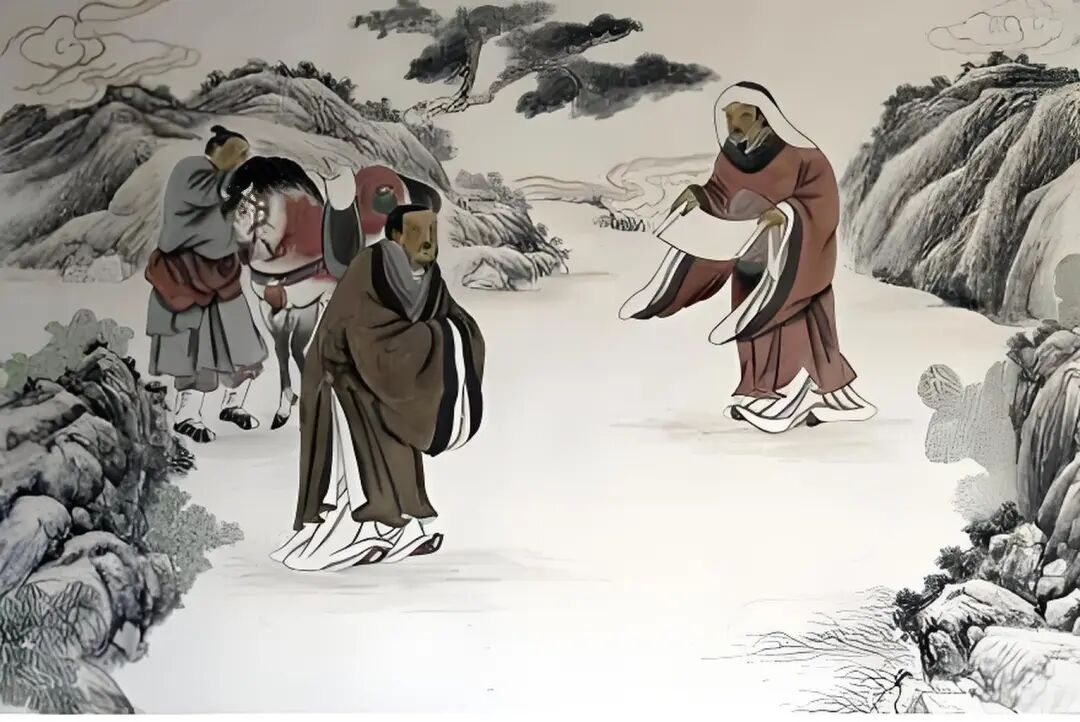
Following this event, Qiu Chuji’s fame spread far and wide. Genghis Khan granted him the authority to ‘govern all monastics under heaven’ and bestowed upon him residence in Taiji Palace in Yanjing (now Beijing’s Baiyun Temple). From then on, the Quanzhen Longmen School, centered at Baiyun Temple, widely opened its doors and vigorously promoted its teachings. Taoists from all directions flocked to it, and its influence rapidly expanded throughout the Jin, Song, and Western Xia territories, becoming the most influential and widely disseminated branch of Quanzhen Dao. This historical opportunity not only transformed the Longmen School from secluded mountain cultivation to temple-based propagation but also laid a solid political and popular foundation for the later ‘Longmen Revival.’ It can be said that the Taoist lineage prospered due to a single word, and its tradition flourished by halting slaughter.
Conclusion
For nearly eight hundred years, the Quanzhen Longmen School has consistently upheld the principles of ‘preserving the truth of Laozi and Zhuangzi’ and ‘benefiting others through self-discipline,’ ensuring the continuity of its Dharma lineage and the enduring presence of its Taoist spirit. In today’s era of highly developed material civilization, people’s spiritual worlds face numerous challenges. Daoist Master Zhang Gaocheng’s prescription for tranquility, encapsulated in the four characters ‘Ding Zhu Li Tou’ (stabilize within), is precisely the Taoist wisdom that the Quanzhen Longmen School offers to contemporary society. As members of the Taoist community, we feel both gratified and deeply responsible—the millennia-old inner teachings of Taoism should radiate even greater brilliance in this new era, contributing their due strength to social harmony and peace of mind.